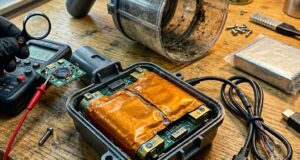
You turn on your compact car vacuum, and instead of the usual smooth, open hum, you hear it: a sharp, high-pitched whine, a labored wheeze, or a sudden rhythmic pulsing.
That sudden change in pitch is not just an annoying noise. It is your motor screaming for help.
When a car vacuum encounters a restriction, the acoustic profile changes instantly. Most people assume a loud, straining motor means “it’s sucking extra hard.” In reality, it means the internal dynamics have completely collapsed. If ignored, that sound is the final warning before the copper coils melt or the bearing seizes completely.
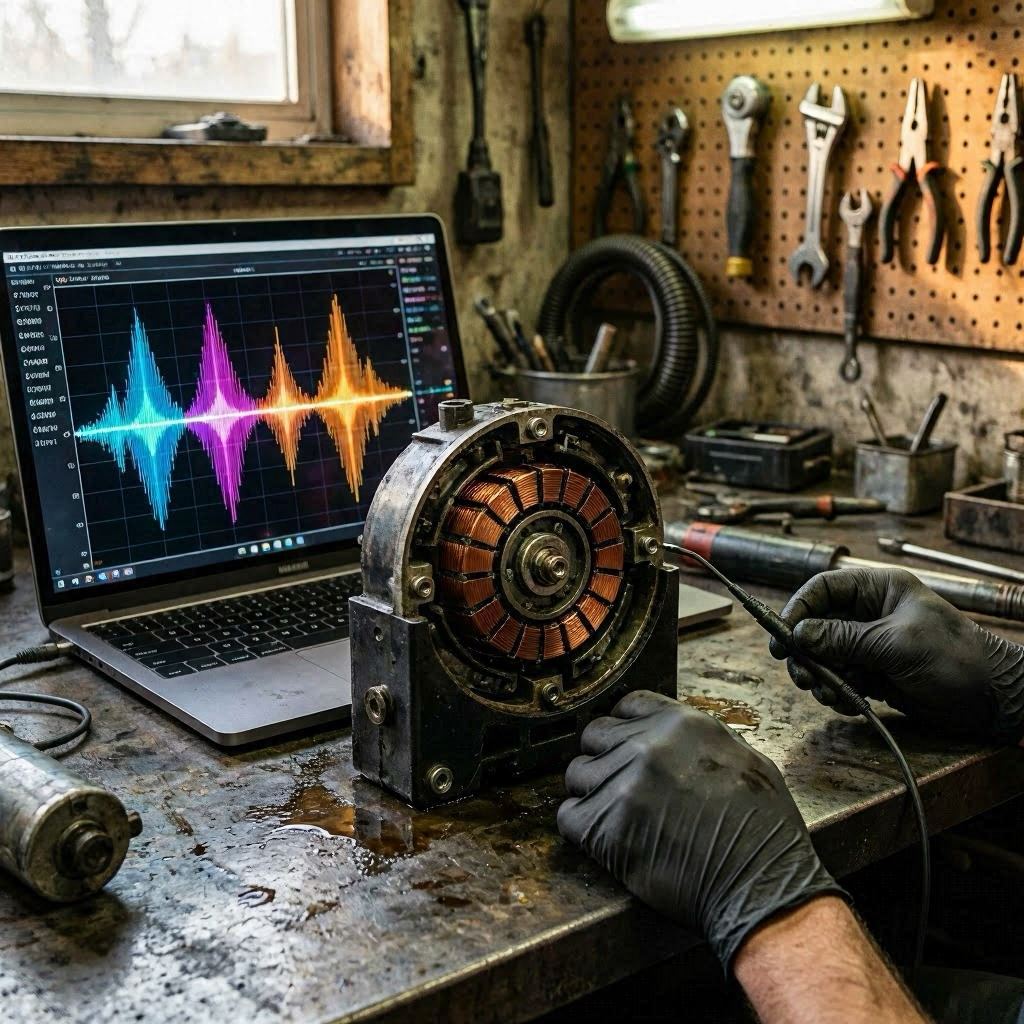
To keep your machine running cleanly, let’s unpack the physics behind the clogged motor sound, identify the modern detailing hazards causing it, and address the common misconceptions that ruin good hardware.
1. The Sonic Shift: Why Does the Sound Change?
A vacuum motor relies on a precise balance of resistance and airflow. When everything is clear, the internal fan spins at its intended design speed, moving a large volume of air that dampens the raw sound of the spinning armature.
Normal Flow:  [Smooth Air Intake] ---> [Low-Pitch Stable Hum] ---> [Cool Exhaust]
Clogged Flow: [Blocked Intake]   ---> [High-Pitch RPM Spike]  ---> [Trapped Heat/Whine]
When a clog occurs—whether in the nozzle, the hose, or deep inside the filter mesh—something counterintuitive happens. The fan no longer has air to push. With no air resistance against the fan blades, the motor actually spins faster (RPM spikes dramatically).
This hyper-spinning creates that distinct, high-pitched straining whine. The motor sounds like it is working overtime because it is spinning out of control in an aerodynamic vacuum, starved of the very air it needs to regulate its velocity and temperature.
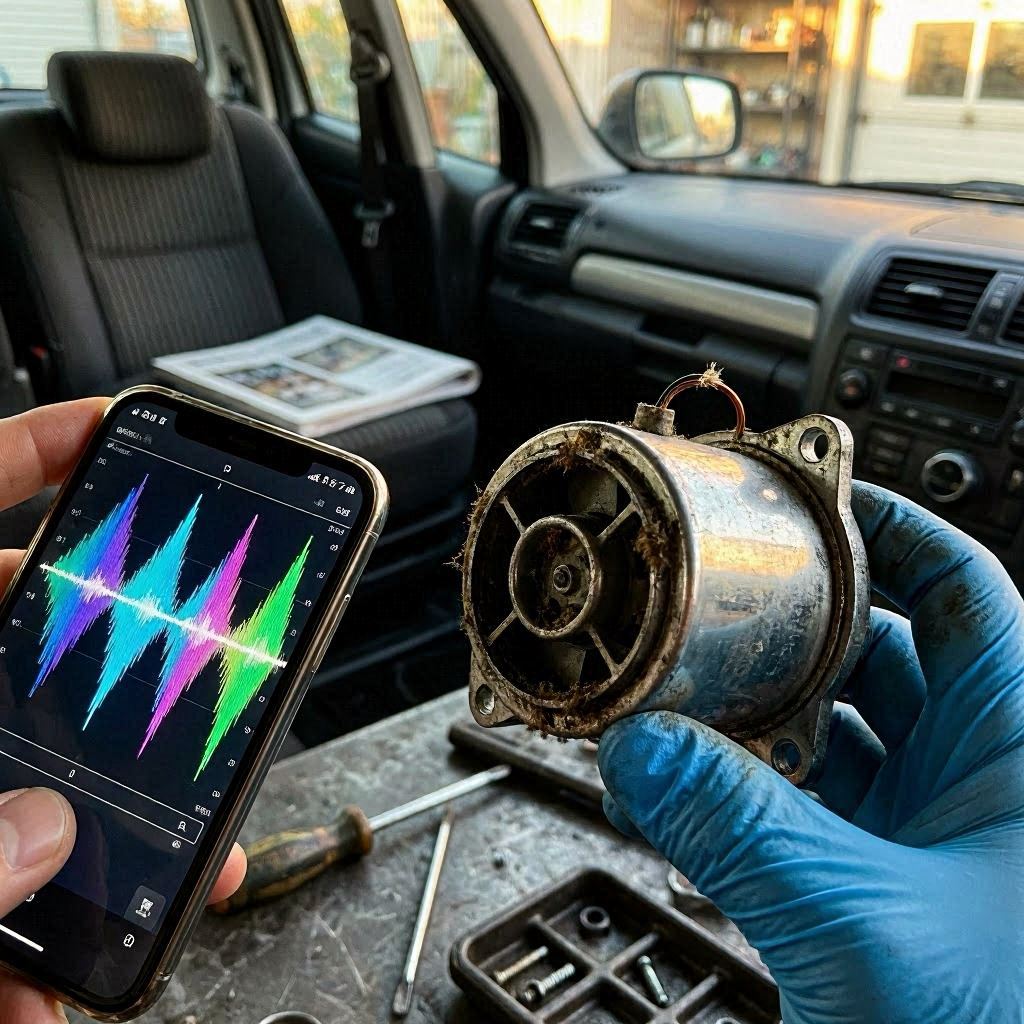
2. Modern Detailing Hazards Triggering the Strain
Car interiors present a unique cocktail of debris that domestic vacuums rarely encounter. These specific materials alter the acoustic signature of your machine in distinct ways:
The Sticky Candy / Drink Residue Seal
- The Sound: A muffled, low-end groaning that drops in pitch rather than climbs.
- The Culprit: Dried soda, spilled coffee, or melted candy from cup holders gets sucked into the nozzle. The sticky residue acts as a dampener, physically gluing the internal check-valve (duckbill flap) shut or binding the primary mesh. The motor suffocates instantly.
The Leaf & Twig Bridging Effect
- The Sound: A sudden, sharp rattle followed by a permanent high-frequency whistle.
- The Culprit: Dry leaves and small twigs from the floor mats wedge themselves sideways inside the narrow intake tube. This creates a “bridge” that acts as a dam, catching every piece of hair and lint that follows. Within seconds, a total structural blockage forms inside the dark plastic housing where you can’t see it.
Micro-Powder Saturation (Gym Chalk, Dry Mud, Ash)
- The Sound: A hollow, roaring sound that grows louder over three to four cleaning sessions.
- The Culprit: Fine dust passes straight through the basic collection bin and embeds itself deeply into the weave of the fabric or paper filter. The container looks empty, but the filter is completely sealed by a microscopic layer of dust, choking the intake pathway permanently.
3. Real-World Challenges in Noise Troubleshooting
Diagnosing these sounds isn’t always straightforward due to modern design elements:
- Sound-Dampening Casings: Many modern premium car vacuums utilize thick plastic double-walls to lower external noise. While great for your ears, it masks the early acoustic warning signs of a clog, allowing the motor to bake in its own heat before you realize it’s struggling.
- Cordless Smart Sensors: High-end cordless units use electronic sensors to detect airflow drops. Instead of a continuous whine, they will pulse the motor automatically (vroom… vroom… vroom) before shutting down. Users often mistake this rhythmic pulsing for a dead battery or a software glitch, when it is actually a mechanical air blockage.
4. The Diagnostic Breakdown: Sound vs. Solution
If your vacuum starts sounding foreign, match the acoustic profile to the immediate fix below:
| The Exact Sound | The Hidden Root Cause | The Immediate Tactical Action |
|---|---|---|
| High-pitched, whistling scream | Air is forcing its way through a tiny microscopic crack in a clogged filter or a warped rubber gasket. | Strip down the housing, wash the filter thoroughly with warm water, and check the rubber seals for alignment. |
| Heavy, rhythmic chugging/thumping | A large, solid object (like a coin, gravel, or a stray screw) is lodged right at the impeller entry point. | Shake the unit upside down without the nozzle attached to dislodge heavy debris from the intake throat. |
| Gradual drop in pitch + burning smell | The motor bearings are fighting friction because fine grit has bypassed the filter into the mechanical core. | Discontinue use immediately. Clean the motor housing with compressed air from the exhaust side outward. |
5. Counter-Arguments & Clarifications (Objections & Answers)
Objection 1: “The vacuum still has some suction, so the high-pitched sound can’t be a total clog. Why should I stop cleaning?”
Answer: Partial suction is highly deceptive. While the machine might still pick up light dust at the tip, the reduced volume of air passing through the housing is insufficient to cool the internal electronics. Running the machine in this state for more than two minutes creates a massive thermal buildup that permanently degrades the motor brushes and degrades battery health.
Objection 2: “I always empty the plastic dirt collection cup when it’s half full, so my vacuum shouldn’t be making a straining noise.”
Answer: The emptiness of the dirt cup is irrelevant if the filter surface itself is blinded. Fine, powdery cabin dust creates an invisible barrier across the filter pores long before the cup fills up. The sound is directly tied to permeability, not volume. Shake out or brush the filter element every single time you empty the physical cup.
Objection 3: “Can’t I just use high-pressure gas station air to blow out the clog from the inside out while it’s running?”
Answer: Never do this while the motor is powered on. Forcing high-pressure air against the rotation of a spinning high-RPM fan blade can snap the delicate plastic impellers or force abrasive dust directly deeper into the motor bearings, destroying the unit instantly. Always clear blockages with the power completely off.
Side Note: Protecting Your Ears During Heavy Detailing
When troubleshooting a screaming vacuum motor in the tight, enclosed acoustics of a car cabin, the decibel levels can easily spike past safe thresholds. To protect your hearing during long maintenance or detailing sessions, wearing the best sleep earbud with passive noise isolation or active noise cancellation is an excellent, low-profile alternative to bulky industrial earmuffs. It blocks out the harsh, high-frequency motor whine while allowing you to focus on the task comfortably.
Your car vacuum communicates its mechanical health entirely through acoustics. A clean, open path produces a deep, effortless draw. The moment that tone shifts toward a frantic, high-pitched whistle or a choked roar, drop the nozzle, pull the filter, and clear the airway. Listening to your machine today prevents a dead motor tomorrow.