
You grab your cordless cleaner from the garage, step inside your car, and hit the power switch. It roars to life with incredible suction. But seven minutes later, just as you start working on the deep crevices of the passenger seat, the indicator light flashes red and the machine goes completely dead.
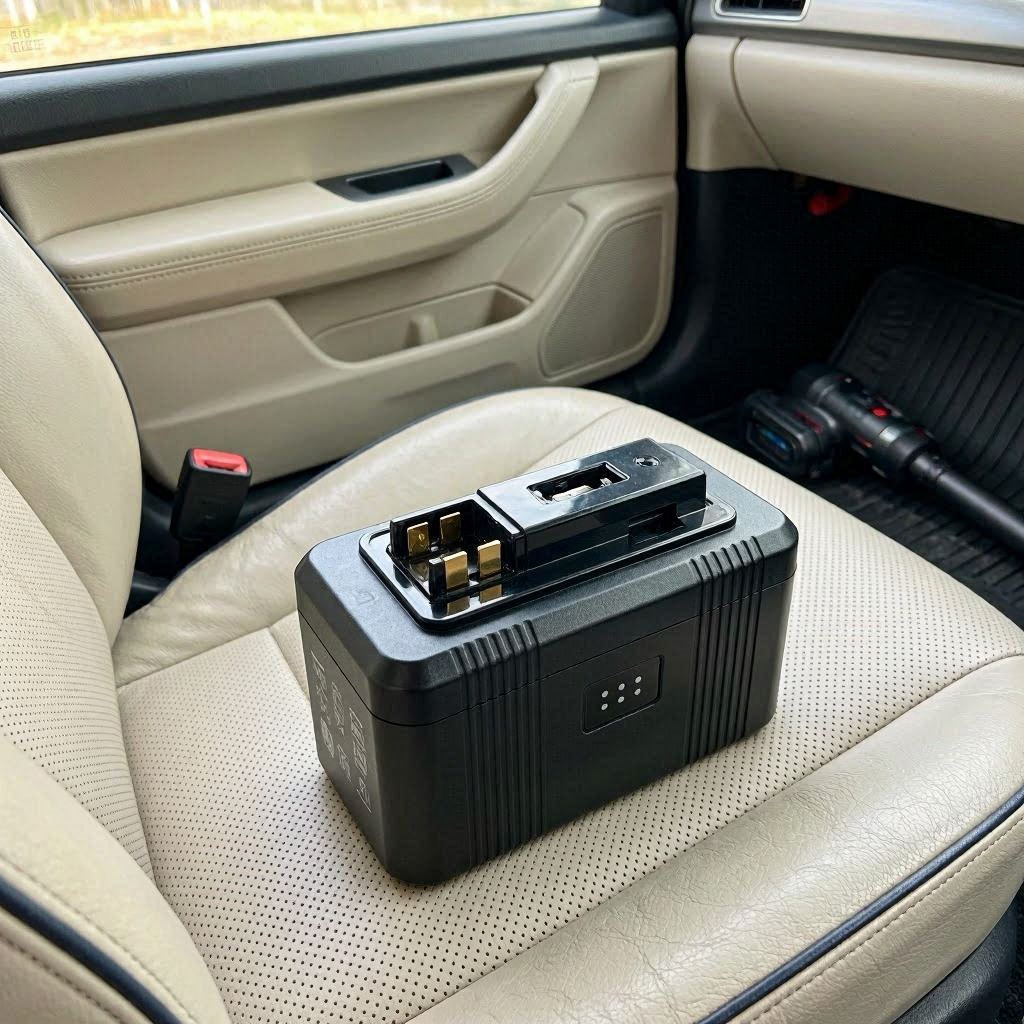
If your portable vacuum feels like it spends 90% of its life on the charging dock and only 10% actually cleaning, you are dealing with the harsh reality of modern power density constraints.
While cordless convenience has revolutionized car detailing, the relationship between compact lithium-ion cells and high-performance motors is incredibly volatile. Let’s bypass the surface-level tips and analyze the true engineering bottlenecks, hidden environmental drains, and structural habits that pull the plug on your cleaning sessions, ensuring you get maximum endurance out of the best portable car vacuum.
1. The Energy Math: High Current vs. Miniature Cells
To understand why the power drops so fast, we have to look at the severe physical limits inside the handle of a handheld vacuum.
[3x Lithium Cells (12V Total)] ---> [Boost Converter Electronic Circuit] ---> [100,000 RPM Brushless Motor]
              |                                     |                                       |
     (Heat Accumulation)                  (Voltage Sag Under Load)                 (Massive 15A Current Draw)
To compete with traditional plug-in wall units, modern portable vacuums utilize ultra-high-speed brushless digital motors.
- The Draw: Spinning a motor at 80,000 to 100,000 RPM to pull deep embedded dirt requires massive amounts of electrical current—often between 15 to 20 Amperes under heavy load.
- The Limit: To keep the vacuum lightweight and balanced in one hand, manufacturers can only fit 3 or 4 small cylindrical lithium-ion cells inside the casing. Forcing small batteries to discharge at such a violent rate causes an immediate phenomenon known as Voltage Sag, where the available runtime drops exponentially faster than the actual physical capacity of the cell.
2. Unseen Issues Accelerating Rapid Battery Loss
If your cordless machine is losing its charge within single-digit minutes, the true culprits are usually hidden deeply within these specific automotive-cleaning dynamics:
The “Max Suction” Trap and Dynamic Resistance
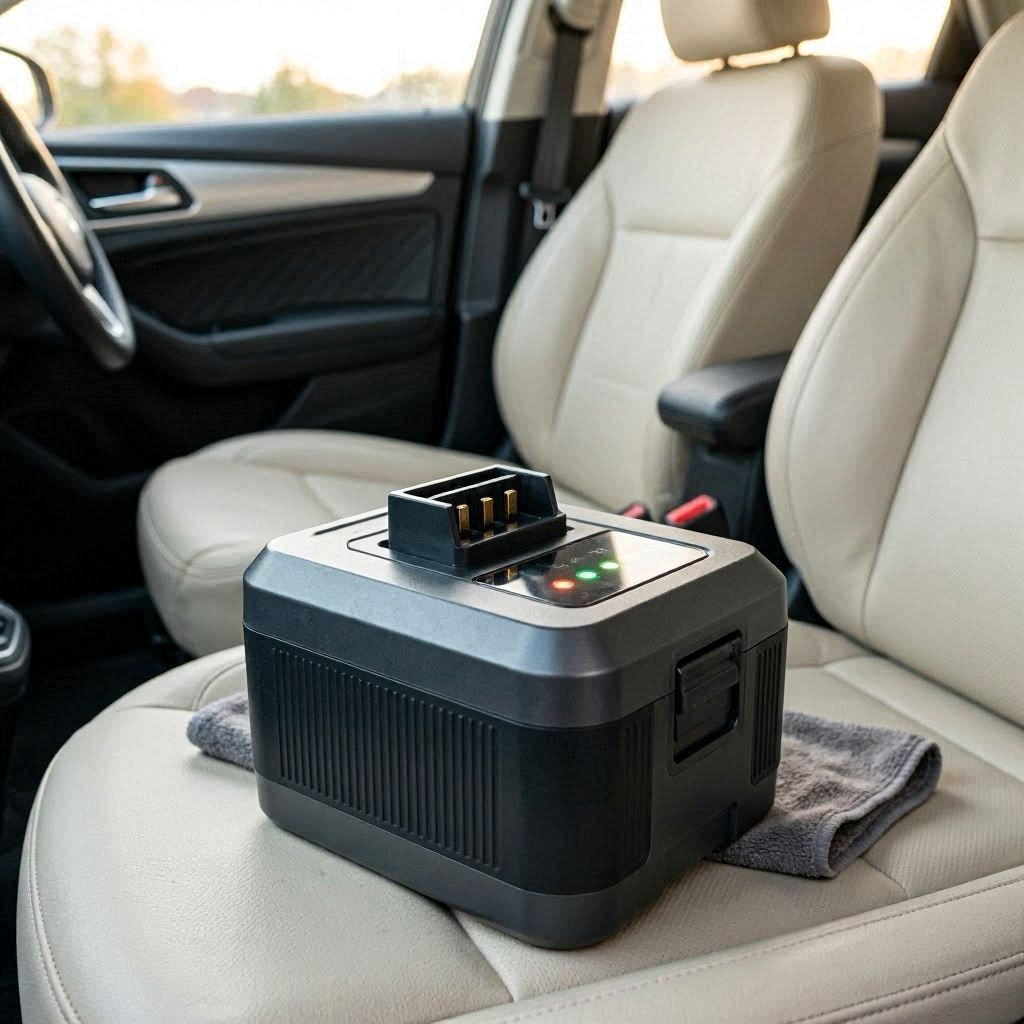
Most premium handhelds feature two modes: Eco/Standard and Max/Turbo. Standard mode draws minimal current, but users automatically switch to Max the moment they see stubborn pet hair or floorboard sand. What most don’t realize is that Max mode doesn’t just use twice the power—it increases battery drain by 3x to 4x due to internal heat generation. Max mode is engineered strictly for 30-second spot cleaning, not entire car mats.
The Blinded Filter Parasitic Load
When a filter mesh is choked with fine dust or microscopic pollen, the air passage narrows down significantly. Because the fan blades have less air to displace, the motor encounters internal aerodynamic turbulence, causing it to run hotter and force the electronic speed controller (ESC) to pull more raw current from the battery pack just to maintain its operational RPM. A dirty filter is a direct parasitic drain on battery cells.
The Closed-Cabin Greenhouse Thermal Soak
Storing your cordless vacuum inside a hot car glove box or trunk during summer acts as a silent killer for lithium chemistry. Ambient car cabin temperatures can easily soar past 50°C (122°F). High heat destabilizes the internal electrolyte solutions within the cells, triggering a high self-discharge rate. Your battery drains its capacity automatically while sitting completely turned off in the dark.
3. Real-World Diagnostic Guide to Evaluate Battery Degradation
Before buying a replacement unit, utilize this specific troubleshooting framework to identify if your runtime loss is a mechanical block or structural cell failure:
| Diagnostic Action | Observation | The Hidden Diagnostic Meaning |
| The Continuous Air Run Test | Run the vacuum completely empty with the nozzle and filter removed. | If the battery lasts close to its advertised factory time, your fast drain issue is entirely caused by a clogged filter choking the motor. |
| The Surface Temperature Check | Touch the base of the handle immediately after a fast 5-minute shutdown. | If the casing feels blisteringly hot, the internal battery Management System (BMS) didn’t empty; it triggered a protective thermal shutdown to prevent an explosion. |
| The Immediate Charge Rebound Test | Plug the dead vacuum into the charger and monitor the status lights. | If the indicator jumps from 0% to 50% within just 10 minutes of plugging it in, the internal battery cells have high internal resistance and can no longer hold a stable current under load. |
4. Tactical Usage Habits for Sustained Operational Longevity
To extract every single second of power out of the best portable car vacuum without destroying its long-term cycle life, alter your operating strategy using these technical adjustments:
Never Store the Battery at Absolute Zero or Absolute Full
Lithium-ion cells experience the highest amount of structural degradation when they sit for long periods at either 0% or 100% capacity.
- The Safe Zone: If you finish a detailing session and the vacuum is completely dead, never leave it empty in your garage for weeks.
- The Solution: Charge it promptly, but avoid leaving it permanently attached to a cheap wall charger that lacks an intelligent overcharge cutoff circuit, as continuous trickle-charging degrades the anode structure.
Employ the “Prep First, Vacuum Second” Principle
The most common efficiency error is turning the vacuum on and keeping it running while you manually move floor mats, adjust the car seats, open the doors, or pick up large trash items by hand. This wasted air-running time eats up valuable milliampere-hours. Keep the power switched off until your hand is actively positioned to make a sweeping pass across the fabric surface.
Keep a Clear Dynamic Intake Clearance
When cleaning tight spaces like door pockets or under-seat brackets, do not jam the plastic tip directly into corners to create an airtight seal. Blocking the intake nose drops the internal pressure sharply, causing the motor to work against high physical resistance. Always maintain a tiny 2mm gap at the tip to keep air rushing smoothly into the housing, which cools the internal components and reduces current strain.
A cordless car vacuum cannot be treated with the same reckless runtimes as a corded domestic appliance. It is a highly optimized, power-dense device operating on a strict energy budget. By keeping the intake pathways perfectly clear, avoiding prolonged utilization of high-draw turbo modes, and protecting the unit from the brutal thermal fluctuations of a locked vehicle cabin, you can easily double both your immediate cleaning runtime and the overall operational life of your machine.